In this episode, join guest scholars Jenna Weissman Joselit, Deborah Dash Moore, and Deborah Waxman, as they explore Reconstructionist Judaism. They chart the rise of the movement, what sets it apart from other theological branches, and how it has influenced the wider American Jewish landscape; then look at where Reconstructionism stands today within a community divided over Israel’s and Zionism’s role in American Jewish identity.
AVISHAY ARTSY: Welcome to Adventures in Jewish Studies, the podcast of the Association for Jewish Studies. In every episode, we take you on an entertaining and intellectual journey about Jewish life, history and culture, with the help of some of the world’s leading Jewish studies scholars. I’m your host for this episode, Avishay Artsy.
American Jewry is dominated by three big denominations: Reform, Conservative, and Orthodox. But there’s a fourth movement: Reconstructionism, whose history, set of beliefs, and modes of practice are less well-known, even to other Jews. In this episode, we’ll focus on Reconstructionism, or Reconstructing Judaism as it has recently been renamed: the first, and thus far, only, Jewish denomination established in the United States. Its founder was Rabbi Mordecai M. Kaplan, one of the leading Jewish thinkers of the 20th century.
Kaplan didn’t set out to start his own denomination. He wanted to create an approach to Judaism that any denomination could adopt. He believed that Judaism had to be reinterpreted, or reconstructed, for each generation. A founding mantra of Reconstructionism is that “the past has a vote, not a veto.” Kaplan saw Judaism as an “evolving religious civilization” that can adopt or discard rituals and practices as it saw fit. Traditionally observant Jews thought this approach was radical – even heretical.
So come with us as we explore Kaplan’s ideas and his legacy with three Jewish studies scholars; chart the rise of Reconstructionism, what sets it apart from other theological branches, and how it has influenced the wider American Jewish landscape; and look at where Reconstructionism stands today within a community divided over Israel’s and Zionism’s role in American Jewish identity.
Reconstructionism is a tiny slice of the pie, accounting for two to three percent of American Jews who themselves make up only about 2.4% of the U.S. Compare that to the other denominations: according to a 2021 Pew Research Study, about a third of American Jews are Reform… 15 percent are Conservative… and 8 percent are Orthodox. A full third of American Jews don’t affiliate with any denomination.
Our three guests today have different relationships with Reconstructionism. First up, Rabbi Deborah Waxman. From 2014 through the fall of 2026, she served as president and CEO of Reconstructing Judaism. That’s the central organization of the Reconstructionist movement.
DEBORAH WAXMAN: So I am a child of the Conservative movement. My origin story maps onto the Reconstructionist origin story pretty precisely. Kaplan, in his day, he believed that the Conservative movement, which was founded kind of as a centrist movement, that there was a left wing, a center wing, and a right wing of the Conservative movement, and he wanted Reconstructionism to be recognized as the left wing. He was not successful in those efforts. I am a product of the left wing of the Conservative movement, so I was deeply shaped by Reconstructionism, even though I never heard the name Mordecai Kaplan or the word Reconstructionism until I was in my early 20s. I came of age just as feminism was really affecting Conservative Judaism in the 70s, and I had the same education as the boys for my bat mitzvah, and I had a full Saturday morning bat mitzvah in 1979, which was pretty unusual in the Conservative movement at that point.
AVISHAY ARTSY: Waxman graduated from Columbia University in the late 80s and decided to become a rabbi. She didn’t grow up knowing any women who were rabbis. The Conservative movement’s main seminary, The Jewish Theological Seminary, only started accepting female rabbinical students in the early 80s. Waxman found it to be too focused on halakha, or Jewish law.
DEBORAH WAXMAN: And at that point in time, the rationale to allow women to become rabbis was that they become halakhic males, and that felt too narrow and problematic to me.
AVISHAY ARTSY: She enrolled instead at the Reconstructionist Rabbinical College. It was founded in 1968 on a principle of egalitarianism, accepting women among their earliest students.
DEBORAH WAXMAN: So by the time I graduated, I was a very fierce ideological Reconstructionist. My rabbinate has always been in organizational work for many reasons, including because that would allow me to also pursue academic work… So I was able to work… and get a doctorate in American Jewish history at Temple University along the way. I wrote on the Reconstructionist movement… because I am endlessly interested in the questions that Reconstructionists tend to ask… and the community of people who are drawn to those questions are so nourishing to me that it's just a really life-giving way of being Jewish.
AVISHAY ARTSY: Our second guest was very much raised within the Reconstructionist synagogue.
DEBORAH DASH MOORE: My name is Deborah Dash Moore. I am the Jonathan Friedman Distinguished University Professor of History at the University of Michigan. I'm also Professor of Judaic Studies at the University of Michigan… There is a Reconstructionist congregation here that I belong to. I have long ties to Reconstructionism. I grew up as a kid living in New York City at SAJ, which my parents were members of.
AVISHAY ARTSY: SAJ is Society for the Advancement of Judaism, the Reconstructionist synagogue on Manhattan's Upper West Side. Mordecai Kaplan founded it in 1922.
Jenna Weissman Joselit is not a Reconstructionist. But she is the author of a new book on Kaplan.
JENNA WEISSMAN JOSELIT: I am the Charles E. Smith Professor of Judaic Studies and Professor of History at George Washington University and my claim to fame right now is that I'm the brand new biographer of a brand new biography of Mordechai Menachem Kaplan, published by Yale's lovely Jewish Lives series, and the book is called “Mordechai M. Kaplan: Restless Soul.”
JENNA WEISSMAN JOSELIT: I'm an Upper West Sider and his presence very much haunts the byways of my neighborhood, and anybody I think who's interested in modern Jewish life has heard of Mordechai Kaplan to one degree or another and so when Yale asked me to do this… it turned out to be quite a wonderful challenge… and having the option to spend time in his company, particularly within the pages of his diary, something that he kept religiously for 70 years or nearly 70 years was just an enormous treat and enlarged my sense not only of him but of the American Jewish experience at which he was I would say at virtually every single table in the 20th century.
AVISHAY ARTSY: Reading Kaplan’s extensive journals and diaries gave Joselit a real sense of how complex Kaplan was, and how he changed and evolved over many decades.
JENNA WEISSMAN JOSELIT: He lived to be 102. Few people can lay claim to that, certainly back in his day. And he was very active, constantly agitating for much of those 102 years… What I very much wanted to do was get a sense of Mordechai Menachem Kaplan as a person, not just as a fountainhead of ideas… And ultimately at the end of the day to make it clear that this book is as much a profile of American Jews of the 20th century as it is a personal profile of Mordechai Kaplan.
AVISHAY ARTSY: So, with our three guides, let’s trace Kaplan’s life story and better understand how his ideas gave rise to Reconstructionism.
SCORING IN
AVISHAY ARTSY: Mordecai Kaplan was born in 1881 in the Jewish Pale of Settlement in tsarist Russia, in present-day Lithuania. When he was nine years old, his family moved to New York where he attended public school and yeshiva, received an undergraduate degree at the City College of New York, and a master’s and a doctorate in philosophy at Columbia University. He also studied Talmud with his father, a prominent rabbi, and took classes at the Jewish Theological Seminary of America, which, while now the home of Conservative Judaism, was founded as an Orthodox institution to combat the growing Reform movement and preserve traditional Jewish practices.
Kaplan was ordained in 1902 and hired at Congregation Kehilath Jeshurun in Manhattan, one of the leading modern Orthodox congregations in the country, first as the administrator of the religious school and then as rabbi of the congregation.
Around this time, Kaplan began expressing real concerns with Orthodoxy’s ability to meet his own spiritual needs and the need to make Judaism feel relevant. He wrote in a letter to his congregation that “Judaism need not and must not be afraid to meet and absorb all that is good in modern culture.” He started questioning whether the Torah actually came from God and whether prayers and rituals were effective. His responsibilities as the leader of an Orthodox congregation began to clash with his interest in reconciling Jewish identity and modernity.
DEBORAH WAXMAN: First and foremost, the theological shift, the introduction of rationalism and how much that challenged supernatural understandings of God and the nature of creation and so what that meant for belief, whereas in the pre-modern times, religion was the explanation for absolutely everything, the shrinking of religion's influence with the rise of secularization, and secondly, the emergence of new modes of government, especially nation-states where, for the first time, Jews could be, at least in Western society, understood as individual citizens of the state rather than this corporate identity as Jews both externally imposed and internally maintained, desired and maintained through rabbinic authority. There were so many different ways to be Jewish, so many different expressions of being Jewish, and also a separation for the first time ever of the religion of Judaism from the experience of Jewishness.
SCORING OUT
AVISHAY ARTSY: Kaplan sought to harmonize two things that were seemingly at odds in the modern era: rationalism and religion.
DEBORAH WAXMAN: He was very influenced by process theologians… he put himself in the line with Maimonides, frankly, and Spinoza in a non-personal understanding of the divine, deeply inspired by the natural world. He saw so many people rejecting religion because of rationalism, and he really felt that a harmonization was possible. He saw democracy as the next stage of Jewish evolution and saw it as tremendously positive, as really kind of emerging from and pointing back to the divine, and he really wanted much greater democratization, and that's where the roots of egalitarian commitments in Reconstructionism emerged out of a fundamental commitment to democratic practice.
AVISHAY ARTSY: Kaplan decided to go back to the Jewish Theological Seminary to be the principal of the newly formed teachers' institute. He’d later serve as dean of the school and hold a professorship there for more than fifty years.
It was as a teacher at JTSA that Kaplan began conceiving of institutions that could carry out his vision of a reconstructed Judaism. He began with a new idea: a Jewish community center that, “would bring Jews together… for social, cultural and recreational purposes in addition to worship.” In the mid-1910s, he organized the Jewish Center in New York, which still exists today on West 86th Street, and served as its rabbi.
JENNA WEISSMAN JOSELIT: He forms it as a new kind of synagogue laboratory. Today the ideas that define the Jewish Center, the idea that a shul is more than a house of worship, that it's a center of sociability and of community and of political action, all of these things, that was a very brand new idea… It's to be all things to all people. It's to be a shul and an auditorium and a place to see films and a restaurant and a place to shoot hoops and take a swim and to have meetings… and so it fits the expansiveness, the spaciousness, the sense of American Jewish possibility that ran riot here pre-World War I.
AVISHAY ARTSY: At this time his falling out with Orthodoxy became more pronounced. He wrote, quote, “The doctrine of infallibility rules out of court all research and criticism and demands implicit faith in the truth of whatever has come down from the past. It precludes all conscious development in thought and practice.” He also took aim at Reform Judaism for breaking too much with tradition. He sought a middle ground that incorporated tradition without being beholden to the past.
One of his innovations was to view mitzvot not as commandments from God, but as the expressed values of the Jewish people. For that reason, Reconstructionism is often described as post-halakhic, or post-Jewish law.
DEBORAH DASH MOORE: I wrote a piece together with a scholar and friend, Andrew Bush, on gender in Reconstructionist thought, and one of the things we emphasized there was Kaplan's radical reconceptualization of what constitutes a mitzvah, that since it's not a commandment given on Mount Sinai but is generated by Jews themselves as a collective, right, that religion grows out of the collective, that allows for the kinds of changes that occurred across time.
AVISHAY ARTSY: Kaplan’s increasingly radical views led to tensions with other leaders of the Jewish Center. He left it in 1922 to establish, just one block away, a separate organization, the Society for the Advancement of Judaism, or SAJ.
As a congregational rabbi, teacher, and academic administrator, Kaplan worked out his ideas about reconstructing Judaism in sermons and magazine articles. But it was in writing books that his ideas really found a broad audience.
JENNA WEISSMAN JOSELIT: He gets involved in an essay contest of all things in the early 1930s and that gives him the motivation necessary to buckle down and to write. And so he takes all these ideas that he's been sermonizing about and institutionalizing and renders them in the form of a book that's over 500 pages and very heavily forested with footnotes and that becomes “Judaism as a Civilization.”
AVISHAY ARTSY: Kaplan went on to write many other books, but 1934’s “Judaism as a Civilization” proved to be his landmark work. In it he detailed a vision of Judaism as an “evolving religious civilization” that needs to continuously adapt in order to survive. The following year he launched a magazine called The Reconstructionist that served as the intellectual voice of the movement that he called Reconstructionism.
JENNA WEISSMAN JOSELIT: He's not looking to build a denomination. He's looking to create a kind of sensibility, a way of looking at Jewish life that transcends denominations, that eschews boundaries, that has a number of principles in which Jewishness is to be enjoyed, not enjoined, that God figures less than the centrality of the Jewish people. He's offering up a brand new vocabulary and crisscrossing this country in an attempt to get American Jews to shake off the cobwebs and shake off their dependence on Eastern Europe and on sentimentality and to think through and in buoyant, smart, contemporary language what Jewishness has to offer.
SCORING IN
AVISHAY ARTSY: Among Kaplan’s interests was the Zionist movement. He argued that the land of Israel was the spiritual center of the Jewish people, and he worked to build ties between American Jews and Jews living in what was then called Palestine under British rule. In 1925, the American Zionist Organization sent Kaplan to Jerusalem as its official representative for the opening of Hebrew University.
JENNA WEISSMAN JOSELIT: He brings Zionism actively into the fold, works very actively in the post-war period in an attempt to redefine Zionism so it's not just about political sovereignty but about a cultural renaissance and works both within Israel and back in the diaspora to get that going.
AVISHAY ARTSY: After Kaplan’s first wife, Lena Rubin Kaplan, died, he married Israeli artist Rivkah Rieger Kaplan. In the 1950s and 60s they commuted back and forth between the Upper West Side and Jerusalem to try and build Zionist support in the US.
DEBORAH DASH MOORE: Kaplan was a Zionist. He was a cultural Zionist, not a political Zionist, which is to say he felt that the return of Jews to Palestine was crucially important for the flourishing of Judaism.
After seeing the expulsion of the Palestinians during Israel’s War of Independence in 1948, Kaplan wrote in his 1959 book “A New Zionism” that Zionism had become “a refugee movement which has given rise to an Arab refugee problem.” Still, he was a supporter of Israel as a cultural homeland for Jews.
SCORING OUT
AVISHAY ARTSY: In recent years, and especially following the Hamas attacks of October 7, 2023 and the subsequent war in Gaza, the anti-Zionist movement has gained currency worldwide among progressive, left-wing Jews. Many such Jews have found a spiritual home in Reconstructionism, with its emphasis on justice, freedom, and equality. That has led to tensions within more traditional segments of Reconstructionism, who, like Kaplan did, see the Jewish state as a key feature of Jewish peoplehood.
Reconstructing Judaism identifies itself as a progressive Zionist organization. Waxman says the movement emphasizes what she calls “covenantal community across difference,” but that debates over Israel and Zionism have severely tested the movement’s collectivist approach.
DEBORAH WAXMAN: As the Israel consensus is broken down, it's been the hardest conversation we possibly can have. We are trying to preserve the intergenerational conversation. We are trying to strengthen people. It's very, very painful for me to see individuals and organizations making statements and drawing red lines that cast off huge swaths of the Jewish community. I think it is unwise and unsustainable from almost every measure.
AVISHAY ARTSY: As Kaplan was building support for the new state of Israel, he continued to push for a renewal of Jewish practice in the United States. He saw Reconstructionism as a “school of thought” that could be applied across denominations and help bridge divides between Jews.
DEBORAH WAXMAN: He was deeply opposed to the split, any kind of split, and he, in formulating Reconstructionism as an approach, he really wanted there to be conservative Reconstructionists and reform Reconstructionists and orthodox and Zionist… like, he wanted it to absolutely be an adjective rather than a noun.
AVISHAY ARTSY: Kaplan’s post-denominational vision started to give way under pressure from Ira Eisenstein, Kaplan’s son-in-law and the number two at SAJ. Eisenstein was eager to make sure that Reconstructionism succeeded.
JENNA WEISSMAN JOSELIT: That means enshrining it, institutionalizing it as a denomination. So little by little in the 60s Kaplan takes steps to honor that, even though he's a little queasy, I would say, about the idea of turning his back on that which had been his reigning idea and coming up with a denomination like all others if only in part because it's a duplification of effort, of resources, of fundraising, of institutions, but ultimately makes his peace with the creation of an autonomous movement.
AVISHAY ARTSY: Another of Kaplan’s ideas that proved to be a paradigm shift in modern Jewish thought is that of Jewish peoplehood. He argued that community is central to Jewishness: the sense of connectedness, regardless of denomination or geography. This word captured the complex nature of Jewish belonging.
JENNA WEISSMAN JOSELIT: And so that at the end of the day is the ultimate gift of Reconstructionism, to place community at the center, and I suspect in that sense Kaplan has had a very profound impact on all of the denominations right now. All of them put a very strong premium on being, as they put it, “in community,” but that was his gift. That was his understanding and that denominations got in the way of that larger sense of community and that notion of community pops up all the time when Jews are endangered but he wanted it to be salient and resonant and enduring when Jews were not under threat and could just live their lives fully as American Jews and I find that a very poignant and hopeful idea.
AVISHAY ARTSY: Kaplan sought to help his congregants and readers reconstruct their identities as modern American Jews not beholden to the past.
JENNA WEISSMAN JOSELIT: As proud, as assertive, not just defined by anti-Semitism and feeling that they had what to offer the world and to one another. He's so mindful of the many gifts that history offers up, and not history as a straitjacket but history as a repertoire of wonderful ideas and possibilities, that tradition shouldn't be a stranglehold but a springboard.
AVISHAY ARTSY: Kaplan was speaking to Jewish immigrants from Eastern Europe and their children and grandchildren, many of whom were eager to embrace a new American identity and leave the old world behind.
DEBORAH WAXMAN: You know, there's that apocryphal story that many, many immigrants, as the ships sailed into New York Harbor, they threw their tefillin into New York Harbor as soon as they saw the Statue of Liberty. His goal was to help them to reconstruct Judaism on modern terms so that they need not cast it off. He felt like Judaism had so much to offer in terms of wisdom and in practice, and people were kind of saying, “oh, I can't accept this orthodox approach, so therefore I have to cast it off,” and he said, “no, we are modern people with an historic sensibility, an historic consciousness.”
AVISHAY ARTSY: While other Jewish leaders saw a threat in the fragmenting of American Jewish identity, Kaplan saw that diversity as a vitalizing force.
DEBORAH WAXMAN: In this moment of shattered authority, there were lots of people who said, no, the only way to be Jewish is to be religious. The Orthodox said maximal practice, classical Reform said theological belief… Political Zionists were saying, the only way to be Jewish is no religion at all, just politics. Kaplan… saw the diversity as only strengthening. He was looking for ways to set the widest possible boundaries without compromising standards.
SCORING IN
AVISHAY ARTSY: Kaplan also championed the role of women in synagogue life. He was influenced by women’s suffrage and the 1920 passage of the 19th Amendment, which recognized the right of women to vote. In 1922, soon after founding SAJ, Kaplan presided over the first public celebration of a bat mitzvah in the United States for his eldest daughter Judith. We covered this in an earlier episode of Adventures in Jewish Studies called “America's First Bat Mitzvah.” Until then, reading from the Torah had traditionally been reserved for males. But a sense of egalitarianism set Reconstructionism apart.
DEBORAH DASH MOORE: Certainly in comparison with the Orthodox, which, of course, is what Kaplan knew, the integration of women throughout the congregation and on the bimah marks it as very different.
AVISHAY ARTSY: Deborah Dash Moore had her bat mitzvah in 1959.
DEBORAH DASH MOORE: I became bat mitzvah as just a regular thing. I did everything that the boys did and I didn't think of that as anything unusual at the time until I tried at summer camp, which was not obviously a Reconstructionist summer camp, after my 13th birthday to say, “gee, I've had a bat mitzvah, you know, I would like an aliyah and I'd like to read from Torah.” And that generated this enormous consternation among the boys because none of them had grown up in a situation where girls had had equal education, and the counselor eventually said, “okay, you could have it since, you know,” and he gave me this aliyah and I go up to the bima and a bunch of boys walked out in protest.
SCORING OUT
AVISHAY ARTSY: Kaplan also sought to split from conservative Judaism on another issue affecting women and divorce: the problem of the agunah, literally “the chained woman.” Religious women required their husband’s permission to divorce. Without the husband’s consent, called a get, the women could not remarry religiously.
DEBORAH WAXMAN: In the years after all of the pogroms in Eastern Europe and World War I, there were many, many women whose husbands, their whereabouts were unknown, and they were really, really stuck. And the conservative movement understood the agonizing justice concern there, and felt very hamstrung by the halakhic process. And this was absolutely maddening to Kaplan and the circle around them.
AVISHAY ARTSY: The conservative movement ultimately found their way around the problem by inserting a clause in the conservative ketubah, or Jewish wedding document, that gave a rabbinic court the right to force a husband to give his wife a get or divorce. But Kaplan and his supporters thought that didn’t go far enough. They saw it as a justice issue.
DEBORAH WAXMAN: When… the Reconstructionist Rabbinical Association was established in the 1970s, they created an egalitarian get where, unlike in halakhic process, women could initiate divorce. Kaplan had paved the way for that 40 years earlier with an article that he published in 1934.
AVISHAY ARTSY: Another of Kaplan’s radical shifts in Jewish thought is to reject the idea of Jews as the “chosen people.” This idea has biblical roots in God’s sacred covenant with Abraham and later with the Israelites at Mount Sinai. But when Kaplan published The New Haggadah in 1941, he removed references to Jews as the “chosen people.”
DEBORAH DASH MOORE: I think that it's an adjustment to living in a democracy that is really crucial and it's a way of recognizing Jewish distinctiveness, but without the sense of a superiority or differentness, a set apartness that makes for, I think, a kind of attitude sort of generally widespread among Jews about their specialness.
AVISHAY ARTSY: Nowadays it’s common for people to curate and publish their own haggadot, but Kaplan’s was a radical departure. It also omitted descriptions of the ten plagues, and integrated themes of universal freedom and democracy.
JENNA WEISSMAN JOSELIT: So the idea that the texts are there as a platform for liturgical expression or renovation, reinterpretation, that's his idea. He also changes, some would say messes, others would say recalibrates, the notion of the Shabbat morning siddur. The idea that liturgical texts are not static and set in stone but can be opened up to new generations, that's his idea.
AVISHAY ARTSY: Kaplan’s retooling of the Sabbath prayer book echoed his changes to the Passover Haggadah. He cut references to the Jews as the “chosen people,” and he removed what felt like core elements of the Passover story: God’s revelation of the Torah to Moses, the parting of the Red Sea, and belief in the coming of a personal Messiah. Other passages were retained but context was added. So for example, prayers for the restoration of Israel were retained, but editors noted that this should not be construed as the return of all Jews to Palestine. Another major innovation came in the second half of the prayerbook: supplementary readings that could be incorporated into weekly services.
DEBORAH DASH MOORE: The integration of non-Jewish materials, understanding them as part, potentially, of what Jews could use to pray, to reach the kind of spiritual understanding that is valued in Judaism, that too is new.
SCORING IN
AVISHAY ARTSY: In the book’s preface, the editors expressed a belief that the new arrangement “will strengthen the spirit of faith and piety in many Jews who do not find that the prayer books now in use fully answer their spiritual needs.”
This proved to be the last straw for more traditional Orthodox Jews. Kaplan had introduced bat mitzvahs for girls, questioned the divine source of the Torah, and stripped Jews of their “chosen people” status. This new prayer book was a bridge too far for the Union of Orthodox Rabbis, or Agudath HaRabonim.
JENNA WEISSMAN JOSELIT: They actually brand him as a heretic. And in 1945, on the heels, first of the Haggadah, and then on the heels of the Siddur, the Agudath HaRabonim, the right-wing division of orthodoxy, largely European-trained and oriented rabbis, put him in herem. I believe Kaplan was the only American rabbi ever to be put in herem, to be excommunicated. And not only that, but at this large-scale gathering. This was not a quiet little thing where a group of rabbis in a bet din got together and, you know, pronounced a mumbo-jumbo against Kaplan and called it a day. This was a huge spectacle. The New York Times was notified. It took place in a midtown hotel, not in some kind of quiet little corner of immigrant Jewish New York. And to add insult to injury, one of the attendees, and to this day it's not clear whether this was deliberate or inadvertent, one of the attendees actually burned a copy of the Siddur that had been put on the table and kind of held up and this curse of the snake pronounced against it. And what slays me every single time is that this event took place in May of 1945. It was a book burning, and whether inadvertent or deliberate – let's give the folks a shadow of a doubt and say it was inadvertent – nobody stops the book burning. Nobody tries to put out the fire.
AVISHAY ARTSY: Kaplan was pained and horrified by this declaration of heresy. The Jewish community outside of the extreme Orthodox segment rallied to his side. He eventually came to see his excommunication as clear proof of the need to modernize Judaism.
SCORING OUT
AVISHAY ARTSY: Not all of Kaplan’s efforts proved fruitful. For example, Kaplan continually tried to remove the Kol Nidre prayer from the Yom Kippur service at SAJ. He saw it as sentimental and mushy. The congregation saw it as an emotional connection to their heritage, and blocked his efforts.
By the 1960s, Kaplan’s influence was waning, and members of Reconstructionist congregations wanted rabbis who were trained in a Reconstructionist approach.
DEBORAH WAXMAN: And it was the lay people who asked for the establishment of a seminary. So in 1968, the Reconstructionist Rabbinical College was established on egalitarian grounds, here in Philadelphia… and so that was kind of the origins of a denomination. The Reconstructionist movement was kind of the last of the denominational table.
AVISHAY ARTSY: The first graduates of the college went on to establish the Reconstructionist Rabbinical Association.
Reconstructionism didn’t just pioneer gender egalitarianism. In the 1980s, the reconstructionist movement began deliberating whether to accept openly gay and lesbian rabbinical students.
DEBORAH WAXMAN: Congregations weren't quite ready for them, at least in some instances, and it started a movement-wide conversation, and they used the process of values-based decision making, where in an extensive and ongoing discussion where you had to like opt in, you couldn't just like drop in, share your opinions, and exit, they surfaced Jewish values, they surfaced contemporary research… they surfaced American values, Israeli values, and decided which ones were the most determinative, narrated and reflected on the process, and ultimately came to a decision that in 1993, affirmed that openly gay and lesbian people should absolutely become rabbis, should be embraced by their communities… that the communities had to do the work of how to undo discrimination and open themselves up to openly queer people, that's not the language we used at the time, so that I think is an expression of the real communitarian aspect, and whatever people decided individually, that's something else, but this was both on a local level and on a larger level.
AVISHAY ARTSY: That push toward inclusion of LGBTQ Jews has continued in Reconstructionism.
DEBORAH DASH MOORE: More recently, I think that Reconstructionism has been very much open to LGBTQ Jews in terms of integrating them into a community and seeking ways of speaking about them. I know the congregation here in Ann Arbor at one point used to do a version of morning blessings that had been recorded by various LGBTQ individuals, and that was where, even though the words were the same, seeing and hearing them say it in this video had a different effect.
SCORING IN
AVISHAY ARTSY: The movement has changed in other ways as well. Kaplan emphasized a rational, and intellectual approach to Judaism, and was opposed to the superstition and sentimentality of traditional Jewish practices, but the movement has since embraced some of those rituals.
DEBORAH DASH MOORE: There's been a shift to more of an emphasis on spirituality, and influenced, I think, in part by the Jewish counterculture, influenced in part by Hasidism, influenced by other trends in American religious life… For example, when I grew up and the Torah was passed around the congregation, no one kissed it, because Kaplan saw that as superstition. Now, when the Torah goes around, people do kiss it, because there's been a reinterpretation of that as a mark of respect, etc., and not as superstition.
AVISHAY ARTSY: Today, there are about 100 congregations affiliated with Reconstructionism. The college and the congregational organization merged in 2012 and in 2018 changed its name to Reconstructing Judaism.
DEBORAH WAXMAN: The adjective Reconstructionist was inexplicable to people from the very beginning. And when we shifted into the active form, Reconstructing, people get it much more quickly. So even though it's a kind of a quirky locution, our mission became our name and our name became our mission. And people do get the work that we're doing a lot more. So our primary mission is about training rabbinical students from a Reconstructionist perspective, providing resources and supporting congregations who are affiliated with a Reconstructionist approach, advancing the Reconstructionist perspective in the wider world, trying to bring that voice to the public square and claim a seat at tables of important conversations.
SCORING OUT
SCORING IN
AVISHAY ARTSY: “Adventures in Jewish Studies” is made possible with generous support from The Salo W. and Jeannette M. Baron Foundation. The executive producer of the podcast is Warren Hoffman. I’m the lead producer for this episode.
If you enjoy the podcast, we hope you'll help support it by going to “association for jewish studies dot org slash podcast” to make a donation. The Association for Jewish Studies is the world’s largest Jewish studies membership organization. It features an annual conference, publications, fellowships and much more for our members. Visit “association for jewish studies dot org” to learn more. See you next time on “Adventures in Jewish Studies”!
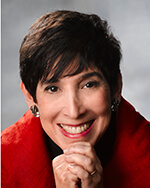
Jenna Weissman Joselit
Jenna Weissman Joselit, the Charles E. Smith Professor of Judaic Studies & Professor of History at the George Washington University, specializes in the history and culture of America’s Jews and in U.S. cultural history from the late 19th century through the 1950s. Her work, both within and without the classroom, pays especially close attention to the relationship between daily life, faith and identity. Weissman Joselit’s books include, most recently, Mordecai M. Kaplan: Restless Soul, a Yale University Press “Jewish Lives” biography (her first); Set in Stone: America’s Embrace of the Ten Commandments; A Perfect Fit: Clothes, Character, and the Promise of America; A Parade of Faiths, and The Wonders of America: Reinventing Jewish Culture, 1880-1950, which received the National Jewish Book Award in History.
For the past 25 years or so, she has also written a monthly column on American Jewish culture first for the Forward and then for Tablet. These days, she’s a contributing writer for the Jewish Review of Books, both its print and Substack editions. Over the years, her essays have also appeared in Sapir, the New Republic, TNR Online, and Gastronomica.
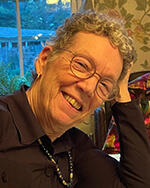
Deborah Dash Moore
Deborah Dash Moore is Jonathan Freedman Distinguished University Professor of History and Judaic Studies at the University of Michigan. An historian of American Jews, she specializes in twentieth-century urban history. Her recent book, Walkers in the City: Jewish Street Photographers of Mid-Century New York (2023) extends her interest to street photography. Currently she serves as editor in chief of the Posen Library of Jewish Culture and Civilization, a ten-volume anthology of original sources translated into English from the biblical period to 2005, selected by leading scholars.
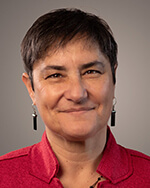
Deborah Waxman
Rabbi Deborah Waxman, Ph.D., is President Emerita of Reconstructing Judaism. The first woman rabbi and out queer person to head a Jewish congregational union and a Jewish seminary, she served as President and Chief Executive Officer of Reconstructing Judaism from 2014 to 2026. During that time, she also served as the President of the Reconstructionist Rabbinical College, where she was the Aaron and Marjorie Ziegelman Presidential Professor. She has spoken and taught extensively in person and online; created the podcast Hashivenu: Jewish Teachings on Resilience; written for the Forward, The Times of Israel, The Philadelphia Inquirer, Sapir, Jewish Telegraphic Agency and others; and has published academic articles on Reconstructionism, American Jewish history and Jewish ethics. Waxman is a cum laude graduate of Columbia College, Columbia University, and graduated from the Reconstructionist Rabbinical College. She earned a Ph.D. in American Jewish history from Temple University. In 2016, Rabbi Waxman was named to the annual “Forward 50” list of most influential Jews by the Forward and in 2020 was named an LGBT icon by Equality Forum. She is honored to serve on the board of Repair the World and practitioners’ council of Leading Edge and as a strategic advisor to A More Perfect Union: The Jewish Partnership for Democracy, and the Mitsui Collective.
.jpg?sfvrsn=ef20b78b_0 "Avishay-Artsy")
Avishay Artsy
Avishay Artsy is an audio and print journalist based in Los Angeles and a senior producer of Vox's daily news explainer podcast Today, Explained. He also hosted and produced the podcast Works In Progress at the UCLA School of the Arts and Architecture, and produced Design and Architecture at KCRW. His writing has appeared in the Jewish Journal, The Forward, Tablet, JTA, and other publications and news outlets. His audio stories have appeared on NPR's Marketplace, KQED's The California Report, WHYY's The Pulse, PRI's The World, Studio 360 and other outlets. He is also an adjunct professor at the USC Annenberg School for Communication and Journalism.
Executive Producer: Warren Hoffman, PhD
Producers: Avishay Artsy, Erin Phillips, and Jeremy Shere