Think you know everything about Jewish matchmaking from Fiddler on the Roof? Think again! While the beloved musical frames arranged marriage as "tradition" and romantic love as its modern antidote, scholars argue the reality was far more nuanced — and in some ways, exactly the reverse of what the show depicts.
In this episode, guest scholars Naomi Seidman, Elisheva Carlebach, Shulamit Magnus, and Ayala Fader, along with host Jeremy Shere, discuss the history of Jewish matchmaking and matrimony from the early modern period to the present day. Together, they explore how marriage functioned as an economic institution in Ashkenazi Jewish communities, who the matchmakers really were, and the role love played in the process, along with a look at matchmaking in contemporary Hasidic communities, where many of the old traditions live on.
Jeremy Shere:
One of the many highlights of the classic musical Fiddler on the Roof is is the song "Matchmaker” a catchy tune sung by the young daughters of the story’s main charcter Tevye, a poor milkman raising his family in a shtetl in Eastern Europe. The song is about the excitement and terror of being matched with a husband. In fact, the plot of the story revolves around Tevye trying to marry off his daughters, and the daughters taking matters into their own hands.
But while Fiddler gets some things right about Jewish matchmaking in Eastern Europe, It of course presents a kind of simplified and romanticized version of how matchmaking and marriage actually worked. For example, in Fiddler, the local matchmaker, Yente, proposes a match between Tevye the dairyman's oldest daughter, Tzeitel, and Lazar Wolf, a well-to-do butcher who's a widower and much older than Tzeitel.
[Excerpt from the film version of Fiddler on the Roof]
Jeremy Shere:
But Tzeitel wants to marry Yente. Young Motl, a poor tailor with whom she's fallen in love. The match with Lazar Wolf is meant to represent the old ways, tradition, while Tzeitel's love for Motl is meant to represent romantic love, the very opposite of the traditional ways.
In this episode, we move beyond Fiddler on the Roof to explore and unpack the world of Jewish matchmaking and matrimony from early modern times to the present day. Because according to Naomi Seidman, a professor at the University of Toronto and director of the Center for Diasporan Transnational Studies there, Fidler gets it exactly backwards.
Naomi Seidman:
So we have here a man who has some wealth who's trying to buy himself a younger woman who he's attracted to. This is a completely new way of doing business, and it's evidence that it's so new that Tevye doesn't recognize it. He thinks they're talking about his cow.
Jeremy Shere:
Seidman has written several books on Jewish history and culture, including "The Marriage Plot," which explores love and secularization in Jewish literary traditions.
She notes that while the scene is played for laughs, it's funny or ironic in more ways than one. Because while Tevye agreeing to match his oldest daughter with a butcher is meant to represent the old traditional way of doing things, an older man using his wealth to try and make a match with a young woman is actually a break with tradition.
Naomi Seidman:
It's a complete misunderstanding. The modern match is the one in which the groom's wealth buys female beauty. This is the one that we're very familiar with.
Jeremy Shere:
Naomi Seidman's refusal to marry Lazar Wolf and her love for Motel the tailor, meanwhile, is presented as defying tradition. But in reality, her pairing with Motel is actually much closer to the traditional model of how matches were made among poor East European Jews. And that's not the only thing about matchmaking that Fiddler gets wrong. For example, if all you know about Jewish matchmaking comes from Fiddler on the Roof, you might assume that all or most matchmakers were like the character of Yente, a kind of comical, busybody old woman who made it her business to know about everybody else's business. But traditionally, As far as we know, most matchmakers were actually men.
Elisheva Carlebach:
Seems to have gone back at least to the Middle Ages, where it was primarily men because they were much more mobile.
Jeremy Shere:
This is Elisheva Carlebach, a professor of Jewish history, culture, and society at Columbia.
Elisheva Carlebach:
And they have commerce across many different communities, and they stay over and they meet people and they're The ones who have a lot of opportunity to become matchmakers over space.
Jeremy Shere:
That's not to say that matchmakers were always men. But in any case, whether men or women, who matchmakers were and how matchmaking worked wasn't uniform. Shulamit Magnus is a professor emerita of Jewish studies and history at Oberlin and author of A Woman's Life: Pauline Wengeroff and Memoirs of a Grandmother. She says the ins and outs of matchmaking depended on the community.
Shulamit Magnus:
You would have a very different picture if you were focusing on Jews in Moscow and Jews in St. Petersburg, who were a very rare breed. The only Jews let in there were wealthy and privileged. You wouldn't have this kind of yenta there.
[Musical break: “Tradition!”]
Jeremy Shere:
Now, before we go on, a quick word about the scope and limitations of this episode. We're focusing on matchmaking and marriage in Ashkenazi, or European Jewish societies. Why? Well, mostly because for many Jews and non-Jews, what they know or assume they know about matchmaking comes from Fiddler on the Roof, which is set in Eastern Europe. Jewish matchmaking traditions in Sephardic Jewish cultures are no less interesting, but that's a topic for another episode.
It's also important to note that matchmaking among Ashkenazi Jewish families differed depending on where they lived and on their socioeconomic status. Well into the 19th century, most European Jews lived in small towns in rural areas. Only a relative handful lived in larger towns and cities in or close to urban areas, which meant that they were typically wealthier and more exposed to non-Jewish European culture compared to other Jews. Much of the scholarship on early modern Jewish life focuses on Jews living in organized Jewish communities in such towns and cities, mostly because that's where written records survived.
So now let's travel back in time. To the early modern era, long before the events of Fiddler take place. The first thing to understand is that marriage was fundamentally an economic institution for European Jews and for non-Jews. Here's Magnus again.
Shulamit Magnus:
It is a way to further economic connections and increase wealth, hold on to wealth, and that matters a great deal. I mean, I think that's also a universal situation, but among Jews, who could neither in Christian nor in Muslim lands, who could not own land. That funneled Jews into commercial enterprises. Commercial enterprises means that marriage becomes a critical means to better your circumstances. You're gonna look for a marriage match to benefit the connections you already have, to increase them because two people don't marry, two families marry. And those families have family connections all over the place.
Jeremy Shere:
This isn't to say that love and affection played no role or that the bride and groom-to-be had no choice in the matter. Love did or could play a role, albeit not exactly in the way we think about love today. And young men and women did or could have some say in the matchmaking process. The important point is that marriage and matchmaking were of primary importance in the premodern Ashkenazi Jewish world, and not only for financial reasons. Here's Carlebach again.
Elisheva Carlebach:
Marriage was the most central and significant aspect of adulthood in Ashkenazic Jewish society. It is, by contrast, for example, to Christianity, which elevated celibacy as an ideal, and the Islamic world where polygamy is the ideal, monogamous marriage is the central and ideal form of adult relationships in early modern Jewish society.
Jeremy Shere:
In other words, in this world, being single wasn't really an option. Being married and having kids was the ideal state for individuals and for the community as a whole. In fact, Jewish law historically went even further. If a married man died without his children, his brother was expected to marry the widow, a practice known as levirate marriage, so that the deceased man's family line could continue. But by the early modern period, most communities preferred a ritual release from that obligation, known as chalitzah, rather than the marriage itself. In any case, the point is that in the early modern era, Jews who found themselves single due to their spouse dying or due to divorce typically sought to get married again as soon as they reasonably could.
Elisheva Carlebach:
Many marriages in this period are taking place between adults. Many young women die in childbirth. Their husbands want to remarry as quickly as possible if they're left with an infant, but others are simply— again, marriage was the configuration that was idealized in this society, and the idea that people would be living alone when it was possible to live married meant that they would try regardless of their stage of life.
Jeremy Shere:
So marriage was of primary importance, which is why making good matches was so important. And while there were people who functioned as professional matchmakers, or shalchanim, it was usually something they did on the side, not as a full-time profession.
Elisheva Carlebach:
The most common matchmakers tended to be rabbis because their words could be trusted and because they supposedly knew the character of the people in their congregations. So we have a lot of correspondence in which a rabbi or another communal functionary serves as a matchmaker. And this turned out to be another source of income for some of those people who tended not to get very well paid by the Jewish community.
Jeremy Shere:
In fact, the matchmaking profession was sometimes looked at with suspicion. For example, in Bamberg, a small Jewish community in the south of Germany, matchmaking fees were confined to being a small percentage of the dowry—that is, money or other assets paid by the bride's family to the groom's family.
Elisheva Carlebach:
That ended up having a rather negative effect because it meant that the matchmakers tried to concentrate on the wealthiest people in the hopes of earning a higher feet, thus kind of shunning or leaving out of the process people who weren't going to be able to afford a large dowry. And that was a very negative consequence.
Jeremy Shere:
In one instance, Rabbi Seligman of Bing, in Germany, castigated matchmakers who preyed on supposedly unhappy couples.
Elisheva Carlebach:
And trying to convince them to divorce because they've got a better match for one side or the other waiting on the sidelines. And he says, this is terrible. This is disgusting. Matchmakers are the worst people.
Jeremy Shere:
Nevertheless, matchmaking was of paramount importance, which is why it wasn't left only to professional matchmakers. Pretty much everyone was involved in making matches.
Shulamit Magnus:
Jewish communities were small. People knew one another. They were in the community together. They were in the synagogue together. They were in the chevra kadisha together. They were in business together. People knew one another.
Shulamit Magnus:
So if this one has a daughter, that one has a son. And so the agents for thinking about, oh, this is a match, could be the parents, grandparents, brothers were often involved. You know, there was a sister, and particularly if the guy that the brother is thinking about for his sister happens to be in a business or have connections that would help him to— why not? Neighbors, rabbis. It could be very local. It could be regional. It could be long distance.
Jeremy Shere:
What were families looking for in a potential match? Well, to a certain degree, the criteria for a prospective son or daughter-in-law were basic common sense and things that we still value today, like a good reputation, a good family.
Shulamit Magnus:
Do they have a stable business? They're not in trouble with the authorities. They're not in debt. They have good connections. They have a good reputation in the community. They're not known as thieves, as cheaters.
Jeremy Shere:
As Seidman notes, class also played an important role in Jewish matchmaking. Poor families who had less to offer were typically relegated to making matches with other poor families, while wealthy families sought matches with other wealthy families. Referencing the work of the Hebrew University scholar Sahul Stampfer, Seidman says that, for example, a well-to-do family with a successful business would seek to match their daughter with a boy from a family that also owned a profitable business, or a boy renowned for his prowess at studying Torah, who, contrary to the popular myth of the impoverished yeshiva boy, was also almost always from a wealthy family.
Naomi Seidman:
To be an excellent Talmud scholar meant that your parents could afford for you to sit and learn and study. The poor young yeshiva boy which he doesn't think ever really existed. It was a kind of myth. It was about yeshiva boys pretending to be poor, slumming it for a year or two, sleeping on the benches in the beis midrash in order to meet a rich potential father-in-law.
Jeremy Shere:
And the rich potential father-in-law was eager to add a Talmud prodigy to his family as a symbol of wealth and status.
Naomi Seidman:
You yourself are too busy with your business to learn Torah in the way we all know we should, right? Because everyone, even those who couldn't study Torah. Stampfer describes it as like baseball. We all learn, especially boys, you learn enough baseball that you appreciate that some people are really good at it. But only a very small group of people will actually be good at it. But everybody else will value that. So learning Talmud worked the same way. Everybody was supposed to value it, but very few people could do it. And If you couldn't do it and you had some money, you would buy yourself a kind of, like, a fancy car to have in the driveway. In this case, the fancy car is a very smart teenage boy.
Jeremy Shere:
Torah learning was so highly valued that even Talmud prodigies from poor families could fetch a significant dowry. Solomon Maimon was one such prodigy. In his memoir, Maimon writes about growing up in a backwater Polish town in a dirt-poor family and how his mother tried to parlay her son's genius into financial gain.
Shulamit Magnus:
It's quite humorous where he describes his mother schadchaning him off not once, but multiple times, you know, playing one potential wealthy match against the other. Total commodification. That's how he presents it. It's total commodification of him. He's literally a business and she's marketing him multiple times.
Jeremy Shere:
Now, it was one thing for two families to agree on a match. But marriages could only take place if the powers that be said so. Carlebach notes that during the 17th and 18th centuries, many non-Jewish governments put strict limits on how many marriages among Jews could take place in a single year, as a means of keeping Jewish populations from growing too large.
Elisheva Carlebach:
The Frankfurt ghetto, which housed thousands of Jews, The city of Frankfurt allowed them to have 12 marriages a year for a very long time. This was their way of controlling the Jewish population, but it caused a tremendous amount of anxiety and difficulty and expense whenever it came to the need to marry off a child.
Jeremy Shere:
Then there were the Jewish authorities, the Kahila, a sort of semi-autonomous Jewish municipal authority that governed Jewish life. Handling things like tax collection, education, residency permits, and granting marriage licenses.
Elisheva Carlebach:
It's this community bureaucracy that gets to decide which Jews are going to be granted both marriage permits and residency licenses. The two are not the same. Sometimes you could have somebody who can get married in the city, but they have to leave after a year if they have not earned a residency license. The two were not necessarily identical. Now,
Jeremy Shere:
Now, at this point, you may be wondering, what about the young men and women who were being matched? How much agency, if any, did they have when it came to agreeing to a match? Did their feelings and personal desires count for anything? Yes and no. Here's Magnus again.
Shulamit Magnus:
In terms of the ability of the couples, you know, to agree or not, it wasn't like it never mattered. We do hear of, you know, No, definitely. How much that made a difference, I don't think we have quantified material to know that. We also know in particular with regard to daughters, it was very hard for a daughter to say no to her father. Girls are raised to be compliant and obedient. Often the marriage discussions happened when they were very young.
Jeremy Shere:
As Carlebach notes, young people typically didn't play much or any role in the matchmaking process. It fell on their parents to do background checks, look into where the young couple would live, how they would support themselves, and so on. Things that 14- and 15-year-olds weren't really equipped to handle. But that's not to say that young Jews were literally forced to marry.
Elisheva Carlebach:
Important to state that it is a Jewish law that a marriage cannot take place unless both parties, the man and the woman, themselves agree to it. So if there is any reason for either side, the man or the woman, to disagree, either because they met the person and they find them unpleasant, or they even say sometimes revolting, if they have a chance to voice opposition in advance, then a marriage cannot go forward by Jewish law. In most cases, young teenage people, girls and boys, tended to believe that their parents had their best interests at heart.
Jeremy Shere:
Sometimes, albeit rarely, like Tzeitel and Motel the tailor in Fiddler, young people took things into their own hands. Carlebach relates an example of a 17th-century rabbi who hired a young Jewish manservant to help take care of his sickly daughter. They fell in love, and at first, the rabbi agreed to let his daughter marry the young man.
Elisheva Carlebach:
Then once she became completely healed, he backed out of his agreement. He refused to furnish a dowry, but the girl didn't care. They end up marrying. The father goes ahead and tries to turn to the Christian authorities because it was forbidden for young people to marry without parents' permission. And the rabbi says, “You can't do that. Just because the Christian authorities intervene doesn't mean that the marriage isn't valid. It's valid. Move on.”
Jeremy Shere:
But in most cases, love in the modern sense was a secondary consideration, or not really much of a consideration at all. The song "Do You Love Me?" in Fiddler on the Roof, where Tevye asked his wife, Golda, if she loves him, speaks to this dynamic. In real life, in pre-modern times, as Seidman says, love was something that might grow out of a good match, not something driving a match in the first place.
Naomi Seidman:
We'll just get these two young people together and, you know, hopefully it'll work out and there'll be kids. Love the one you're with.
Jeremy Shere:
And sometimes, maybe even often, couples in arranged marriages did grow to love each other. Carlebach points to Glikl of Hamelin, a Jewish woman who lived in the late 17th and early 18th centuries, who wrote a memoir about her life.
Elisheva Carlebach:
Glikl of Hamelin, the famous and only memoirist who was a woman from this period, wrote of great love that she had for her husband Chaim. She was married, I believe, at age 13 or 14. They raised 12 children to adulthood. 2 died in childhood. And she mourned him. After he died at a relatively young age, in his 50s, for the rest of her life, and actually wrote her memoir as a way of consoling herself in her lonely times. Now, again, is that unusual? We have no reason to suspect that it was.
[Musical break]
Jeremy Shere:
The Jewish way of arranging marriages began to change during the 19th century. More specifically, the Haskalah, or Jewish Enlightenment, which began during the late 18th century, encouraged Jews to pursue secular education and emphasize individual choice and personal feelings including in the realm of marriage. Where traditional matchmaking treated marriage as primarily a family-focused and economic arrangement, the enlightened approach saw marriage more as a matter of personal compatibility, mutual affection, and even romantic love, not as a byproduct of marriage, but as the driving force. Shulamit Magnus says that Jews who bought into and perpetuated the Haskalah known as maskilim, often wrote scathing portrayals of the old ways of arranging marriages.
Shulamit Magnus:
Their memoirs are full of horror stories about arranged marriages and a critique of it, and in particular of very misogynistic depictions of terrible mothers-in-law who beat them, who deprived them of food, who misled them about how much money they were going to be given. That becomes a motif in Maskilich memoir writing, absolutely. And then that becomes part of the trope of Jewish modernity and critique against Jewish traditionalism.
Jeremy Shere:
Many young Jews, meanwhile, read European novels in translation and novels written in Hebrew that told tales of young people falling in love despite the disapproval of their old-fashioned parents who In such novels were the bad guys trying to keep the young lovers apart. For example, the plot of Ahavat Zion, or Love of Zion, a Hebrew novel written by Avraham Mapu and published in 1853, tells the story of a beautiful princess who falls in love with a poor shepherd boy.
Naomi Seidman:
And the way you know it's pure love is that it's a class misalliance. Yet you find out by the end of the novel that he himself is really also a prince. You know, his parents gave him up to a poor shepherd. So, in other words, the conservative class values remain and they're unspoken, but they remain and they're just as strong. And in the same way that the old system kind of denied the significance of sexual attraction, this new system denies the significance of class alliances.
Jeremy Shere:
The last point that Seidman makes is important, that in many ways traditional values still held sway beneath the surface, even as the old ways of arranging marriages came under attack and the language of romantic love took hold. In other words, things didn't change completely all at once, which makes sense. After all, love is not absent from traditional Judaism. In the Bible, in Genesis, Jacob loves Rachel deeply, to the point that he's willing to work for seven more years to earn the right to marry her after being tricked into first marrying Rachel's sister Leah. But as we've seen, while love is not foreign to Jewish tradition, it was not a primary concern in the traditional ways of matchmaking. And even when the idea and language of romantic love began to come to the foreground during the 19th century, they didn't entirely replace the old ways. Marriage was still very much a matter of adjoining of families with the aim of bolstering and protecting their financial status. But some practices did evolve to at least nod towards the advent of the idea of romantic love.
This dynamic is depicted poignantly in the memoirs of Pauline Wengerov, a Jew born in 1833 in present-day Belarus, then part of the Russian Empire, who lived through the major cultural shifts brought about by the Haskalah. Now, to be clear, the Wengoroff family was not typical. They were very wealthy, for one thing, and Wengoroff and her sisters were relatively highly educated. Magnus has written extensively about Wengoroff.
Shulamit Magnus:
Wengoroff talks about an older sister whose marriage was arranged about 2 years before Wengoroff's. She didn't say no to the match, but she wanted to see the guy. And it was absolutely no. She wanted to, and the mother just put her foot down and said, no, that's not what we do. That's not how it's done. We're not doing that.
Jeremy Shere:
But just a few years later, when it's Wengeroff's turn to be married, things have changed. There's still a schadchan, a matchmaker, involved, but now Wengeroff and her prospective husband are allowed to meet.
Shulamit Magnus:
And this young man, they like each other instantly, both of them. So, it is both arranged and they have an attraction and they're like totally enthusiastic about it. This is happening like in 1847, 1848. They both know about romantic marriage. They're in the kind of circles in Jewish society that have heard of this. And they are in love with the idea of saying they're in love. So the fact that it's arranged, it is, but they're also in love. And the parents, two years after the mother said absolutely not to the sister, are fine with it. So that tells us also something about the pace of change in certain circles.
Jeremy Shere:
By certain circles, Magnus means Jewish families that were part of the merchant class and so had some financial stability and were aware of European culture and ideas. Families that were poor and more isolated from non-Jewish European culture were less likely to be open to and impacted by the Haskalah. But as Seidman points out, beneath the Wengeroff's modern veneer, many of the old matchmaking traditions still held sway.
Naomi Seidman:
The explicit ideology was, you know, the groom says to her, "My love." He speaks in the language of erotic love, which, you know, Jews were learning from poetry and songs and literature. Culture in general. But what no one really acknowledges is that the parents have actually thrown these two together into a room and everyone has left the room, which according to the traditional Judaism is strictly forbidden. You're not supposed to be alone in a room. But they've actually engineered that this, this particular boy and this particular girl will be thrown into a room together.
[Music break]
Jeremy Shere:
Today, most non-Orthodox Jews, and really most people, at least in the Western world, obey the dictates of romantic love. We expect to find a potential mate on our own, not through our parents, Of course, many people use dating platforms like Tinder and Bumble, which are, in a sense, digital matchmaking platforms. And popular reality shows like The Bachelor and The Bachelorette are all about finding a good match, as was the Netflix reality show Jewish Matchmaking, which aired in 2023 and featured the professional Jewish matchmaker Eliza Ben-Shalom helping Jewish singles find a perfect match.
And of course there's JDate, a Jewish dating platform which offers personal matchmaking services. So there's clearly still a market for matchmakers and matchmaking, but the emphasis still tends to be on people making individual choices and falling in love, not so much on love as something that emerges from the work of building a life and family together, as it still is in ultra-Orthodox Jewish communities.
Ayala Fader:
I went to a kind of refresher brides class as part of my research. And the bride teacher said, who's in love with their choson, with their bridegroom, their intended, if they were all engaged? And all the girls giggled and raised their hands. And she was like, you don't know anything about love. Like, you won't know till you have 10 children and you're building a home together.
Jeremy Shere:
This is Ayala Fader, a professor of anthropology at Fordham University, whose research focuses on Hasidic communities in Brooklyn. For the most part, matchmaking in these communities works like it did in pre-modern times. Marriage is approached as a joining of families, not just individuals, and parents, sometimes with the help of a matchmaker, negotiate the specifics of what kind of marriage and what sort of life a young couple will have.
Ayala Fader:
Does the girl always want to have a boy who's learning Torah, or maybe just for one year, or does she not mind a working boy? Like, those are complicated negotiations between families because there's the standard where in most Hasidic communities, a boy would learn for at least a year and then probably go to work.
Ayala Fader:
Sometimes in yeshivish families, boys might continue to learn throughout their lives and women might work, or in a Hasidic family, a woman might work for like a couple of years till she has kids and then stop and then he goes to work. So, you have to kind of know as a young girl, and also the parents have to make sure that they know what their daughters want.
Jeremy Shere:
At least one thing that has changed is that the process of matchmaking has become more professionalized. For example, young men and women are expected to have resumes that provide important details about themselves and their families.
Ayala Fader:
I asked one of my friends, like, what's on that resume? She sent me one with blacked out from her kid, and it's like what school he went to, where his father prays, what her mother's maiden name was, really like basic stuff, sometimes how tall he is. And then sometimes she said if the person is a little unusual, they might have a paragraph at the bottom like seeking to grow, looking for something spiritual, or working boy. So, you can sort of individualize them somewhat, but it seems to me like the kind of circulation of those resumes has made the process in some ways kind of more efficient.
Jeremy Shere:
There's much more to say about how matchmaking works in contemporary Hasidic communities. For now, it's worth returning to where we began, to Fiddler on the Roof, which was so popular and remains beloved today because the themes it tackles—love, marriage, parenting—are always with us. Even if how Jews have navigated them has changed over time.
Shulamit Magnus:
So, I think when people look at these issues today, I think it's interesting for people to realize that there's a long history to all of it. And for all the clear differences between now and then, whichever then we're talking about, there's a common humanity. There are common interests and conflicting interests and converging interests. These texts that kind of connect us to times and places in the past and, and can also, I think, help illuminate how we go about looking at these issues now.
Jeremy Shere:
Adventures in Jewish Studies is made possible with generous support from the Salo W. and Jeanette M. Barone Foundation. The executive producer of the podcast is Warren Hoffman. If you enjoy the podcast, We hope you'll help support it by going to associationforjewishstudies.org/podcast to make a donation. The Association for Jewish Studies is the world's largest Jewish studies membership organization. It features an annual conference, publications, fellowships, and much more for our members. Visit associationforjewishstudies.org to learn more. See you next time Naomi Seidman on Adventures in Jewish Studies.
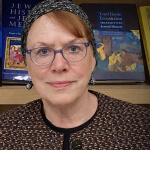
Elisheva Carlebach
Elisheva Carlebach is the Salo Wittmayer Baron Professor of Jewish History, Culture, and Society at Columbia University. She specializes in the cultural, intellectual, and religious history of the Jews in Early Modern Europe, and areas of particular interest include the intersection of Jewish and Christian culture and its effect on notions of tolerance, religious dissent, conversion, messianism, and communal governance. Her books include The Pursuit of Heresy (1990), awarded the National Jewish Book Award, Divided Souls: Converts from Judaism in Early Modern Germany (2000) and Palaces of Time: Jewish Calendar and Culture in Early Modern Europe (2011), winner of the AJS Jordan Schnitzer Book Award. She has twice held fellowships from the National Endowment for the Humanities. She was a Fellow at the New York Public Library Center for Scholars and Writers, Tikvah Fellow at NYU Law School, and Fellow at the Katz Center, University of Penn. She served as Editor of the Association for Jewish Studies Review and chaired the Academic Advisory Council of the Center for Jewish History. She has served as President of the American Academy for Jewish Research and is currently Director, Institute for Israel and Jewish Studies at Columbia. In 2017 she was awarded the Lenfest Distinguished Columbia Faculty Award.

Ayala Fader
Ayala Fader is Professor of Anthropology at Fordham University. She is the author of the award-winning books, Mitzvah Girls: Bringing Up the Next Generation of Hasidic Jews in Brooklyn (2009) and Hidden Heretics: Jewish Doubt in the Digital Age (2020). Fader’s research, supported by fellowships including the NSF and the NEH, appears in academic journals and more public venues. As the founding director of Fordham’s New York Center for Public Anthropology & Sociology, Fader is currently collaborating on the Demystifying Language Project, which works to make linguistic anthropology a social justice resource for public high schools.

Shulamit S. Magnus
Shulamit S. Magnus is Professor Emerita of Jewish Studies and History at Oberlin College. She is a social and cultural historian of the Jews, specializing in the history of Jewish women and the workings of gender in Jewish societies. She is the biographer of the nineteenth-century memoirist, Pauline Wengeroff, and her, Memoirs of a Grandmother, which focus on the experience of women and traditional and modern marriage and families in the era of the Jewish enlightenment movement in eastern Europe. Magnus' most recent book is, Jewish Marital Captivity: The Past, Present, and End of a Historic Abuse (NYU, 2025). This is the first social history of iggun-- Jewish women's marital captivity as a social and communal institution across the Jewish world, and of agunot, women held in marriages (or in obligation to them), against their will-- from early medieval times to the present in the Middle East and North Africa, medieval, early modern, and modern Europe, the Mediterranean, the Ottoman Empire, including the pre-state Yishuv, the US, and Israel. It documents the current state of this abuse and proposes policies, informed by the long history of this abuse and how it is perpetuated, to end, rather than keep managing, iggun. A website, "Project Miriam," and social media to disseminate the book's findings and proposals, are in the works.

Naomi Seidman
Naomi Seidman is the Chancellor Jackman Professor of the Arts in the Department for the Study of Religion and Director of the Centre for Diaspora and Transnational Studies at the University of Toronto. Her 2016 book, The Marriage Plot, or How Jews Fell in Love with Love, and with Literature, explores the transition from arranged marriage to modern romance. More recently, she published Sarah Schenirer and the Bais Yaakov Movement: A Revolution in the Name of Tradition (2019) and Translating the Jewish Freud: Psychoanalysis in Hebrew and Yiddish (2024). She is also a 2016 Guggenheim Fellow.

Jeremy Shere, PhD
Jeremy Shere, PhD, is a podcast producer based in Bloomington, Indiana. Jeremy earned his doctorate in English Literature and Jewish Studies from Indiana University. He is currently the producer of the Frankely Judaic podcast for the Jewish Studies program at the University of Michigan.
Executive Producer: Warren Hoffman, PhD
Producers: Avishay Artsy, Erin Phillips, and Jeremy Shere